

The Problem Nobody Wants to Talk About
There is a number that every B2B data vendor knows and very few will publish without heavy qualification: the true accuracy rate of their database at the moment you actually use it — not the day the records were verified, not the week the sample was prepared, but the specific morning your SDR opens the CSV and starts dialling.
IBM's research puts the annual cost of bad data in the US economy at $3.1 trillion. That figure, cited endlessly in data vendor marketing, is almost never followed by the second question: how much of that is coming from your stack? From the list you bought six months ago? From the CRM records your team hasn't touched since 2023?
ELP Data runs a full accuracy audit of its contact database every year. This is the 2026 edition. The methodology, the findings, and — in a departure from industry norm — the uncomfortable parts are all in here.
"The average B2B database loses 22–25% of its accuracy within 12 months. Teams that don't actively verify and refresh contact data are, in practice, running campaigns against a population that no longer exists in the form they expect."
— ELP Data 2026 Accuracy Audit Findings
Why Data Accuracy Is the Most Under-Discussed Problem in B2B Sales
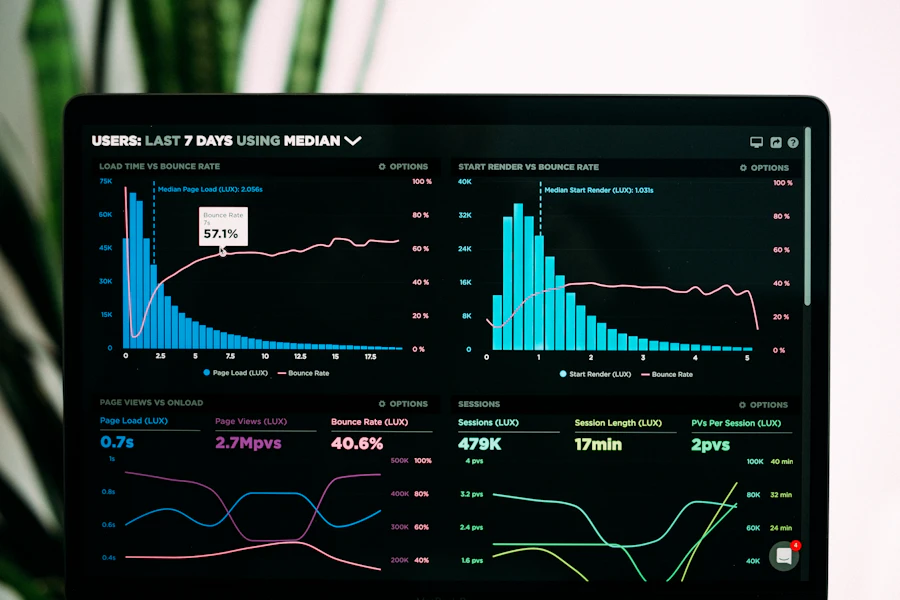
There is a structural reason that data accuracy is chronically under-discussed: the damage is diffuse and hard to attribute. When a paid ad campaign underperforms, you see the numbers immediately. When your email sequence hits a 40% bounce rate because 40% of your list is stale, the damage shows up as poor sender reputation, reduced deliverability, wasted SDR hours, and — most expensively — pipeline that was never built. None of these trace cleanly back to "data quality" on a dashboard.
The result is a market dynamic where data vendors have little competitive pressure to be honest about decay rates, and buyers have limited ability to audit claims before purchase. Most "accuracy guarantees" in the B2B data market are stated as a point-in-time figure — 95%, 97%, 98.5% — without any specification of when the records were verified, by what method, or what the decay trajectory looks like after delivery.
This report attempts to give a more honest accounting. Not to undermine confidence in B2B data as an asset — it remains one of the highest-ROI investments in a go-to-market stack when managed correctly — but to help buyers understand what they are actually purchasing, and what questions to ask.
ELP Data's Verification Methodology
Before the findings, the methodology. ELP Data verifies contacts using a five-signal process. Each signal independently catches a different class of bad record, and the combination produces materially higher accuracy than any single verification method.
| Signal | What It Checks | Class of Error Caught | Used by Most Vendors? |
|---|---|---|---|
| SMTP Handshake Testing | Connects to recipient mail server, confirms mailbox exists without sending | Invalid or closed email addresses | Often (basic) |
| LinkedIn Cross-Reference | Confirms current employer, job title, and seniority match database record | Job changes, promotions, departures | Rarely |
| Job Posting Corroboration | Checks if company is actively hiring in the function, confirming team structure exists | Eliminated roles, restructured departments | Rarely |
| Domain Health Check | Verifies company domain is active, MX records live, not flagged as spam domain | Defunct companies, rebranded domains, acquired entities | Sometimes |
| Suppression List Cross-Match | Checks against known opt-out lists, role address patterns, and known-bad address repositories | Opt-outs, shared inboxes, role addresses (info@, sales@) | Rarely |
The LinkedIn cross-reference and job posting corroboration steps are the ones most vendors skip — they are expensive, they require ongoing API access, and they slow down the verification pipeline. But they are also the steps that catch the largest category of bad records: contacts whose email address still works, but who no longer hold the role you think they do. That category — the living but wrong record — is arguably more damaging than an outright bounce, because it wastes a sales conversation on a person with no buying authority.
Key Findings from ELP Data's 2026 Accuracy Audit

The 2026 audit covered 50.4 million contacts across 47 industries and 185 countries. Records were audited against the five-signal methodology above, with the full audit cycle running over an 18-week period ending in March 2026. Here are the headline findings.
Finding 1: Average Annual Decay Rate Is 22–25%
Across all contacts in the database, the average annual decay rate — the percentage of records that become inaccurate within 12 months — is 22–25%. This aligns with, and at the upper end slightly exceeds, historical industry benchmarks. The increase from earlier audits (2023–2024 showed 19–22%) is attributable to accelerated workforce mobility, AI-driven role restructuring in technology and finance, and mid-market layoffs in 2025.
The practical implication: a contact database delivered today will be approximately 78% accurate after 12 months without any re-verification. After 18 months, 65–68%. After 24 months, closer to 55%. This is not specific to ELP Data — it is a structural feature of the B2B contact data market driven by workforce mobility patterns that no vendor can fully control.
Finding 2: Technology Contacts Decay Slowest (18%), Role-Based Contacts Fastest (28%)
Technology sector contacts — software engineers, product managers, IT directors, CISOs — exhibit the slowest decay in the database at 18% annually. The reasons are structural: technology professionals maintain stable, prominent digital identities on LinkedIn and GitHub; their employers tend to be slower to restructure engineering and product functions; and their email addresses are more likely to follow consistent patterns that signal active usage.
Role-based contacts — records identified by title alone ("Director of Marketing at Company X") rather than by name — decay at 28% annually, the highest of any contact classification. This is expected: directorial and management roles turn over at significantly higher rates than individual contributors, and the implicit assumption that the current holder of a title has the same email and availability as the previous holder is frequently wrong.
Finding 3: Manufacturing Contacts Decay Fastest (31%)
Manufacturing is the highest-decay industry in the audit at 31% annual decay. Three factors drive this: first, manufacturing has a higher proportion of plant-level and operational roles that don't have stable individual email addresses. Second, mid-market manufacturing companies restructured heavily in 2024–2025 in response to supply chain normalisation and automation investment — producing elevated job change rates. Third, manufacturing companies are more likely to use generic role-based email patterns (plant.manager@company.com) that get reassigned rather than retired when a person leaves.
For vendors selling to manufacturing — automation, industrial software, MRO supplies, safety products — this finding has immediate campaign implications: manufacturing contact lists need more frequent re-verification than technology or financial services lists, and outreach to manufacturing should weight phone and LinkedIn outreach more heavily than email-first approaches.
Finding 4: APAC Contacts Have the Highest Bounce Rate (26%)
Asia-Pacific contacts exhibit a 26% email bounce rate — the highest of any region in the audit. This is driven by high workforce mobility in Southeast Asia (Vietnam, Philippines, Indonesia) and India, where job-hopping rates significantly exceed Western markets. It is also partly a consequence of the fragmented corporate email infrastructure in the region: many APAC companies use multiple email systems or personal email addresses for business communication in ways that make verification harder. GDPR-equivalent regulations in APAC are also less uniformly enforced, leading some local data aggregators to maintain records that have not been recently verified.
What 97% Accuracy Actually Means in Practice

ELP Data maintains a 97% accuracy guarantee on all contact databases. This number warrants unpacking, because it is both meaningful and sometimes misunderstood.
97% accuracy means that, at the point of delivery, 97 out of every 100 records pass all five verification signals described above. The remaining 3 records are either flagged for manual review or removed from the dataset before delivery. This is a high bar — most B2B data vendors operate at 85–92% accuracy by comparable measurement standards, not the self-reported figures that appear in marketing materials.
What 97% accuracy does not mean: that every contact will respond, engage, or remain valid for the duration of your campaign. At the point of delivery, 3 in 100 records may still bounce or be unreachable. At campaign scale:
| Campaign Size | Expected Bad Records (97% accuracy) | Expected Bad Records (85% accuracy) | Difference |
|---|---|---|---|
| 5,000 contacts | ~150 bad records | ~750 bad records | 600 fewer errors |
| 25,000 contacts | ~750 bad records | ~3,750 bad records | 3,000 fewer errors |
| 100,000 contacts | ~3,000 bad records | ~15,000 bad records | 12,000 fewer errors |
The gap between 97% and 85% accuracy is not 12 percentage points — it is 12,000 fewer bad records on a 100,000-contact campaign. At SDR productivity of 50 calls or emails per day, 12,000 bad records represents 240 SDR-days of wasted prospecting effort. At a blended SDR cost of $350 per day, that is $84,000 in direct SDR cost wasted — before accounting for domain reputation damage from high bounce rates.
How to Evaluate Any Data Vendor's Accuracy Claims
The B2B data market does not have standardised accuracy measurement. Every vendor defines accuracy differently, measures it differently, and — in some cases — measures it only against records they have selected to verify. The following questions, asked before any data purchase, will reveal the quality behind the claim.
The 6 Questions to Ask Every Data Vendor Before Buying
- What is your verification methodology? Ask for the specific steps — not "multi-source verification" but the actual signals used. SMTP testing only? LinkedIn cross-reference? Job posting corroboration?
- When were these specific records last verified? Not "we verify on a rolling basis" — when was this particular segment last run through the verification process?
- Can I run a 200-record test sample before buying? Any vendor confident in their accuracy will provide a testable sample. Resistance to this request is a red flag.
- What is your replacement policy for bad records? Do you replace records that bounce within 30 days? 90 days? No replacement at all?
- How do you handle contacts who have changed jobs since verification? This is the largest single accuracy category. What's the process for catching it?
- What is your decay rate by industry, and how often do you re-verify? A vendor with real accuracy data will be able to answer this. A vendor with marketing accuracy claims won't.
The 5 Verification Signals ELP Uses That Most Vendors Skip
As detailed in the methodology section above, ELP Data runs five verification signals on every contact. The two signals most vendors skip — LinkedIn cross-reference and job posting corroboration — are the most resource-intensive but also the most powerful at catching the worst class of bad record: the contact whose email still works but who left the company or changed roles. ELP Data's data enrichment services apply these same five signals to existing CRM records, refreshing stale data without requiring a full database replacement. If you are seeing high bounce rates or SDR frustration with contact quality, enrichment against a verified source is almost always faster and cheaper than rebuilding from scratch.
Implications for Sales and Marketing Operations

The practical takeaways from this audit break down differently depending on your role.
If you are in sales operations: build a contact re-verification cadence into your CRM hygiene calendar. Any record older than six months in a high-decay segment (manufacturing, role-based contacts, APAC) should be treated as suspect until re-verified. Invest in enrichment workflows rather than assuming static data stays valid.
If you are in marketing operations: monitor email bounce rates by segment, not just overall. A campaign to Manufacturing contacts will naturally produce higher bounce rates than a campaign to Software sector contacts — not because the data is worse, but because Manufacturing decays faster. Segment-specific bounce benchmarks prevent false alarms and mis-attribution.
If you are evaluating data vendors: the questions above are your starting framework. You can also cross-reference against public resources like BuiltWith or LinkedIn Sales Navigator to spot-check samples before committing to a full purchase. See also our related analysis on the warning signs your B2B contact data is stale — which covers the operational signals that indicate accuracy problems before they become pipeline problems.
The Bottom Line
B2B contact data is a depreciating asset. The fastest-decaying segments lose nearly a third of their accuracy every year. The best verification methodology in the market still produces records that will include some errors. The goal is not zero decay — that is not achievable. The goal is systematic minimisation: through rigorous multi-signal verification at the point of delivery, and through ongoing enrichment processes that catch decay before it corrupts campaigns.
The vendors worth buying from are the ones who will tell you this plainly, show you their verification methodology, give you a testable sample, and back their accuracy claims with a replacement policy. The ones who give you a round number and a confident smile are the ones whose databases are quietly failing your SDR team every morning.
Ready to See What 97% Accuracy Looks Like in Practice?
Request a free sample of 200 verified contacts in your target segment. We'll show you the verification signals run on each record and stand behind the quality with our replacement policy.
No commitment required · Sample delivered within 24 hours · Full methodology documentation included
